
Introduction: What is Frequency?
Frequency is the number of waves that pass a certain point in one second. The unit for frequency is known as Hertz (Hz). Frequency is directly proportional to the the energy and the higher the frequency the higher the energy. The more cycles that occur per second, the higher the frequency. One Hertz is equal to one cycle per second and 50 Hz is equal to 50 cycles per second.
At it most basic, frequency is how often something repeats. In the case of electrical current, frequency is the number of times a sine wave repeats or completes a positive and negative cycle.
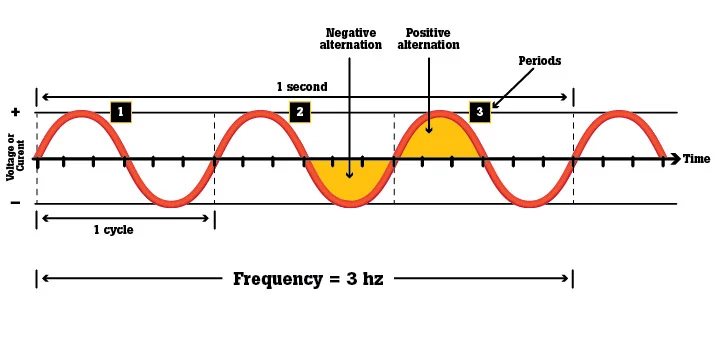
What Is Frequency?
(image from) https://www.fluke.com/en-us/learn/blog/electrical/what-is-frequency
Frequency is typically used to describe electrical equipment operation. In the case of power line frequency it is normally 50Hz or 60Hz. The United States is 60Hz and most of the world is 50Hz, but not always so it is best to check. https://www.worldstandards.eu/electricity/plugvoltage-by-country/
Equipment is designed to operate at a fixed or variable frequency.
Equipment design to operate at a fixed frequency performs abnormally if operated on a different frequency than specified by the manufacture. https://www.kccscientific.com/allproducts-from-kcc-scientific/.
Electronics with motors that turn or vibrate the frequency will determine the speed at the which they operate. Some devices will indicate 50/60Hz, which means it can operate at both 50 Hz and 60Hz. However many electrical devices are designed for 50 Hz or 60Hz but not both. For examples an AC motor within a flip clock designed to operate at 60Hz runs slower if operated in another country at 50Hz. A clock designed to operate at 50Hz will run fast if operated in the USA at 60Hz
What is a Frequency Converter?
A frequency converter is a device that converts electrical power from one frequency to another. It is commonly used to control the speed of a motor by varying the input frequency. Frequency converters can be essential in various applications where the power grid frequency does not match the required frequency for the electrical equipment in use. These devices play a crucial role in optimizing energy and improving the electrical equipment performance. Frequency converters come in different types, such as static frequency converters, rotary frequency converters and solid-state frequency converters. They are designed to convert the frequency of alternative current (AC) power supply to meet the specific requirements of the equipment or machinery being powered. By utilizing frequency converters industry can achieve smooth operation, energy savings and improve motor speed. These devices offer a cost effective and easy way for adapting power sources to meet the operational needs rather than change the equipment’s internal operating components.
Basic Functionality of Frequency Converters.
A frequency converter works by taking an input power (for instance 60 Hz), typically alternating current ( AC) and converting it to a different frequency output (for instance 50Hz). This conversion is achieved through internal electronic components such as inverters, rectifiers, transistors, insulated gate bipolar transistors and other solid-state devices. Modern frequency converters are capable of converting power from one frequency to another with high efficiency and accuracy.
https://www.kccscientific.com/sets-frequency-converter-products-apart/
By adjusting the output frequency, a frequency converter can regulate the speed and performance of the connected motor or device. One of the key benefits of using a frequency converter is the ability to match the voltage and frequency requirements of different equipment, ensuring smooth and reliable operation without compromising performance or efficiency.
Importance of Using Frequency Converters
50 Hz Electrical equipment incorrectly connected to 60 Hz power will operate outside of its design criteria. In this case the equipment will run fast. It will also most likely damage the equipment causing it to fail over time. Equipment powered on the wrong power requirements may overheat, smoke, grind, buzz and simply shut down. As little as a one percent above or below its standard frequency risks damaging equipment. Therefore it is important to select the correct power converter for operating electronics on the local power grid.
How to Select the Right Frequency Converter
When choosing a frequency converter, several factors need to be taken into consideration to ensure optimal performance and compatibility with the power grid and the intended application. It is essential to evaluate the power requirements, input and output voltage specifications, frequency range and load capacity of the equipment to be powered. What country are you powering your device?
What is the voltage, frequency and power plug options in that country?
https://www.worldstandards.eu/electricity/plug-voltage-by-country/
What are the power requirements of the electronic equipment to be powered?
https:// www.kccscientific.com/what-converter-do-i-need/
Does the equipment to be powered have a synchronous or induction motor? Other considerations are what type of frequency converter is needed ( static, rotary or solid state)? By evaluating the requirements, users can effectively choose the proper frequency converter that meets the performance needs of their equipment and deliver long term benefits of energy efficiency, and equipment reliability.
Importance of Utilizing Frequency Converters
In conclusion, frequency converters play a crucial role in modern industrial, commercial and residential applications by providing efficient power conversion, motor speed control and reliable equipment operation. These devices offer a versatile solution for adapting power sources to meet the specific requirements of various equipment and machinery. Proper selection and installation of frequency converters are essential for ensuring optimal performance and equipment reliability across different sectors of the world.